Biomes Funny Cat Ecosystems Funny Cat
Series: Biomes of the Earth in Activeness Serial
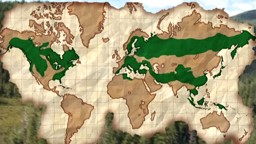
Coniferous Forests
The coniferous forest biome is made upwardly of cone-begetting trees such as pines, firs and spruce, equally well as a varied assortment of other organisms adapted to live in this unique region. Coniferous Forests will take students on a fun-filled trip from...Evidence More
The coniferous forest biome is fabricated upwardly of cone-begetting trees such as pines, firs and spruce, also as a varied assortment of other organisms adapted to alive in this unique region. Coniferous Forests will take students on a fun-filled trip from Asia to North America to explore these treasured woodlands, taking an upward-close look at their shared characteristics while discovering the animal and plant life that call this biome dwelling house. An interview with an ecologist examines the lasting impact that natural forces such as current of air and burn down have had on these forests, while a dramatic experiment illustrates how pollution is emitted from wood fires. Testify Less

Deciduous Forests
Deciduous forests are biomes in which trees are the main life-form. But what makes a forest deciduous? In this informative program, students will explore these colourful woodlands that modify with the seasons. Students will learn about the many...Show More
Deciduous forests are biomes in which copse are the main life-form. But what makes a forest deciduous? In this informative program, students will explore these colourful woodlands that change with the seasons. Students will acquire about the many unlike types of plants and animals that inhabit both the temperate and tropical deciduous forests, while a hands-on investigation about leaves and their pigments is examined through a process called chromatography. Evidence Less

Deserts
Deserts cover nearly 1-fifth of the Earth's land surface. Even in these sand-filled expanses that dot the globe, much life can be found, from plants like cacti and sagebrush to well-adapted animals such every bit the Gila monster and the sidewinder....Show More
Deserts cover nearly one-fifth of the Earth'south land surface. Even in these sand-filled expanses that dot the globe, much life tin can be plant, from plants like cacti and sagebrush to well-adapted animals such equally the Gila monster and the sidewinder. Discover how the process of desertification continually changes more state into deserts each and every yr. A hands-on demonstration helps explain the different adaptations used by plants and animals to conserve water, while a visit with a herpetologist showcases the unusual adaptations of the deadly sidewinder. Show Less

Freshwater Ecosystems
Freshwater ecosystems can be as pocket-size as a puddle or every bit big as a raging river. Ponds, lakes and streams occur on every continent, and are habitation to a host of fish, algae and other water organisms. In Freshwater Ecosystems, students will explore...Show More than
Freshwater ecosystems can exist equally pocket-sized equally a puddle or equally large as a raging river. Ponds, lakes and streams occur on every continent, and are dwelling to a host of fish, algae and other water organisms. In Freshwater Ecosystems, students volition explore these fascinating and various habitats and learn about the biotic and abiotic factors that brand up these ecosystems. A hands-on experiment shows students how to test the amount of dissolved oxygen in two different bodies of water, while a visit with a freshwater naturalist examines the importance of wetlands around the globe. Show Less

Grasslands
Grasslands are wide, sweeping expanses of land with many unlike grasses and very few trees. In Grasslands, students volition examine the importance of these regions that produce much of the world's nutrient. From the prairies of the Bang-up Plains to...Show More
Grasslands are wide, sweeping expanses of land with many different grasses and very few trees. In Grasslands, students will examine the importance of these regions that produce much of the world'south food. From the prairies of the Bang-up Plains to the savannas of Africa, discover the characteristics that all grasslands have in common first with the most obvious - grass! A fun, hands-on experiment illustrates how students can mensurate the wet content of two different soils, while an ecologist discusses how scientists are trying to restore grassland regions to their original state. Show Less

Marine Ecosystems
In Marine Ecosystems, students will explore saltwater environments - from shorelines to coral reefs - and acquire near the fish, plants, mammals and insects that depend on each other for survival in this aquatic biome. Examine concepts such as...Evidence More
In Marine Ecosystems, students will explore saltwater environments - from shorelines to coral reefs - and larn nearly the fish, plants, mammals and insects that depend on each other for survival in this aquatic biome. Examine concepts such equally salinity and currents, and find out about the 3 major life zones found in body of water waters. A fun, hands-on experiment allows students to discover how brine shrimp accept adapted to changes in salt concentration, while a visit with a marine biologist on the Chesapeake Bay examines the fascinating life cycle of the blueish crab. Show Less

Rainforest Biomes
Located throughout the Caribbean, Africa and South America, rainforests are as important to the residuum of the world every bit they are to their inhabitants. In Rainforest Biomes, students will discover how the species of the rainforest have adapted to the...Evidence More
Located throughout the Caribbean area, Africa and South America, rainforests are equally important to the residual of the earth as they are to their inhabitants. In Rainforest Biomes, students will detect how the species of the rainforest have adapted to the temperature and humidity, and why the threat of its destruction volition take a far-reaching touch on on our planet. A visit with an ecologist at the Caribbean National Forest in Puerto Rico examines the work underway to restore the population of the endangered Puerto Rican parrot, while a fun, hands-on investigation demonstrates the vital function that rainforests play in recycling water. Show Less

Tundra
The word tundra means land of no trees, which is a pretty practiced description of this common cold, barren biome that makes up nearly 20 percent of the World's surface. From the Arctic tundra constitute in the Polar zones to the regions of alpine tundra located...Bear witness More than
The word tundra means land of no copse, which is a pretty practiced clarification of this cold, barren biome that makes upward nearly twenty percent of the Earth'south surface. From the Chill tundra found in the Polar zones to the regions of alpine tundra located on the mountaintops of Europe and North America, students volition get an up-close look at this fragile biome. Students explore the biodiversity that exists in these frozen expanses, while a fun, hands-on experiment demonstrates why so many tundra plants are night in color. Evidence Less
brannonvirinarlecou.blogspot.com
Source: https://www.clickview.com.au/curriculum-libraries/series/?cat=3717770&library=primary&title=Biomes%20of%20the%20World%20in%20Action%20Series
0 Response to "Biomes Funny Cat Ecosystems Funny Cat"
Post a Comment